
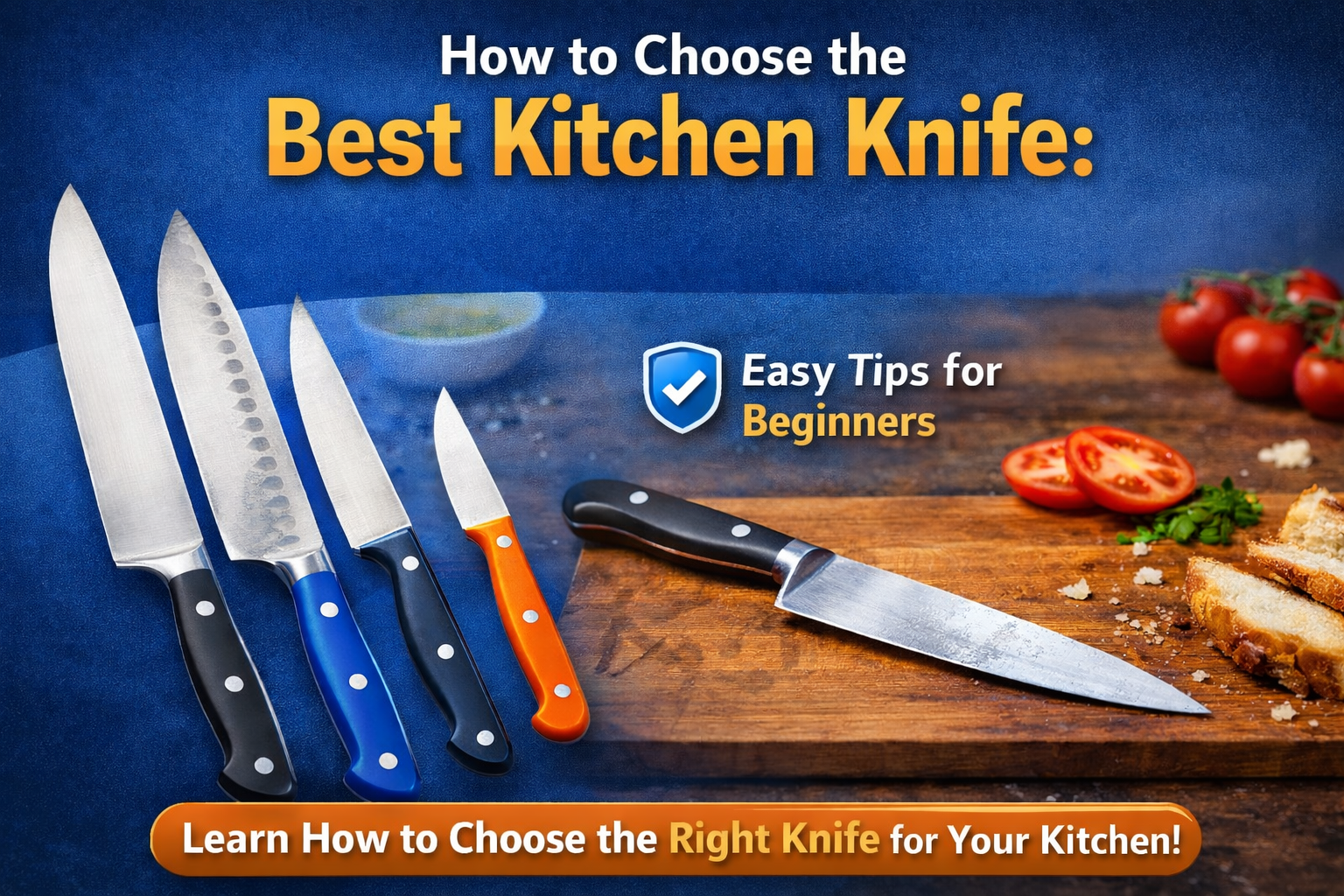
Choosing the best kitchen knife can feel confusing. There are so many options—different sizes, shapes, materials, and brands. It’s easy to get overwhelmed and not know where to start. But picking the right knife is more than just convenience. It affects your safety, speed, and even how well your food turns out. A good knife makes chopping, slicing, and dicing easier and faster. A wrong knife can slow you down and even cause accidents.
If you’re wondering how to choose a chef knife, there are a few important things to keep in mind. Think about weight, sharpness, material, and balance. Your cooking style also matters. A knife that works well for chopping vegetables might not be the best for slicing meat or bread. Every job in the kitchen has the right tool. And as chefs say, your skill is only as sharp as your knife.
A knife may look like a simple tool, but there is a lot to consider. What is your budget? What type of cooking do you do most? What matters to you—blade style, handle comfort, or material? From the bottom of the handle to the tip of the blade, each knife is a reflection of the designer’s idea and purpose.
In this guide, we will make it simple. You will learn the difference between stamped and forged blades. We’ll explain the main types of kitchen knives. You will also get practical tips to pick the knife that suits your cooking and needs. By the end, you will feel confident choosing a knife that makes cooking safer, faster, and more enjoyable.
Why Choosing the Right Kitchen Knife Matters
It is very important to choose the right kitchen knife. It is not just about cutting food. The knife you use can significantly impact your safety and the ease with which you cook. That’s why you should always try to Choose the Best Kitchen Knife for your needs.
Safety
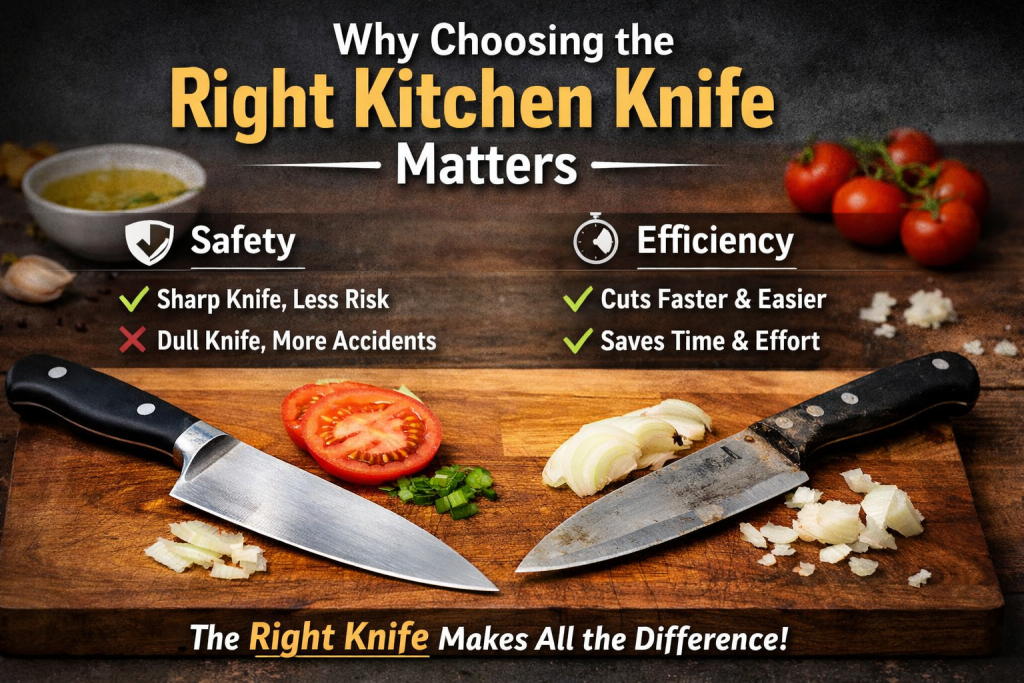
A good knife makes cooking safer. It may sound strange, but a sharp knife is actually safer than a dull one. A sharp knife cuts smoothly. You don’t need to use much force. This gives you better control.
A dull or low-quality knife is more dangerous. You have to press harder. The knife can slip and cause injury. Also, if the handle is not comfortable, it becomes harder to hold properly. This increases the risk.
When you choose the right knife, you feel more in control. This helps you stay safe while cooking.
Efficiency in Cooking
The right knife also makes cooking easier. When you Choose the Best Kitchen Knife, your work becomes faster. You can cut, chop, and slice without struggle.
A good knife feels balanced in your hand. It moves smoothly. You don’t get tired quickly. Even if you are a beginner, you can cut better and faster.
Long-Term Value
A good knife is a smart investment. It may cost more at first, but it lasts longer. You don’t need to replace it again and again.
A high-quality knife stays sharp for a longer time. It also performs better every day. This means you get more value for your money.
When you Choose the Best Kitchen Knife, you save money in the long run and enjoy better performance in your kitchen.
Types of Kitchen Knives
Before you Choose the Best Kitchen Knife, it’s important to understand the basic types. You don’t need to know everything. Just a few knives can handle most of your daily cooking. Let’s look at the most useful ones
Chef’s Knife (Best for All-Purpose Use)
This is the most important knife in your kitchen. If you are a beginner, start with this one.
You can use it for many tasks:
- Chopping vegetables
- Cutting meat
- Slicing fruits
It works for almost everything. That’s why it is called an all-purpose knife.
Santoku Knife (Good for Slicing & Chopping)
Santoku knife is a bit shorter and lighter than a chef’s knife. It feels easy to handle.It is very popular for everyday use.
It is good for:
- Slicing vegetables
- Chopping herbs
- Cutting boneless meat
If you want something simple and comfortable, this is a good option.
Paring Knife (Small Precision Tasks)
Paring knife is a small knife, but very useful. It is perfect for detailed work.
You can use it for:
- Peeling fruits
- Cutting small items
- Trimming vegetables
It gives you better control when working with small ingredients.
Bread Knife (Serrated Edge for Bread)
This knife has a saw-like edge. It is made for cutting soft foods with a hard surface.
Best for:
- Bread
- Cakes
- Tomatoes
The serrated edge helps you cut without crushing the food. You don’t need to buy all these knives at once. Start with a chef’s knife. Then add others later if you need them.
Once you understand these basic types, it becomes much easier to Choose the Best Kitchen Knife for your needs.
Key Factors to Consider Before Buying
Before you Choose the Best Kitchen Knife, it’s important to know what really matters. You don’t need to know everything. Just focus on a few key points. This will help you make the right choice without confusion.
1. Blade Material
When you want to Choose the Best Kitchen Knife, the blade material is very important. It affects how sharp the knife is. It also affects how long the knife stays sharp and how easy it is to take care of.
The two most common types are stainless steel and carbon steel. Here is a simple explanation of both.
Stainless Steel
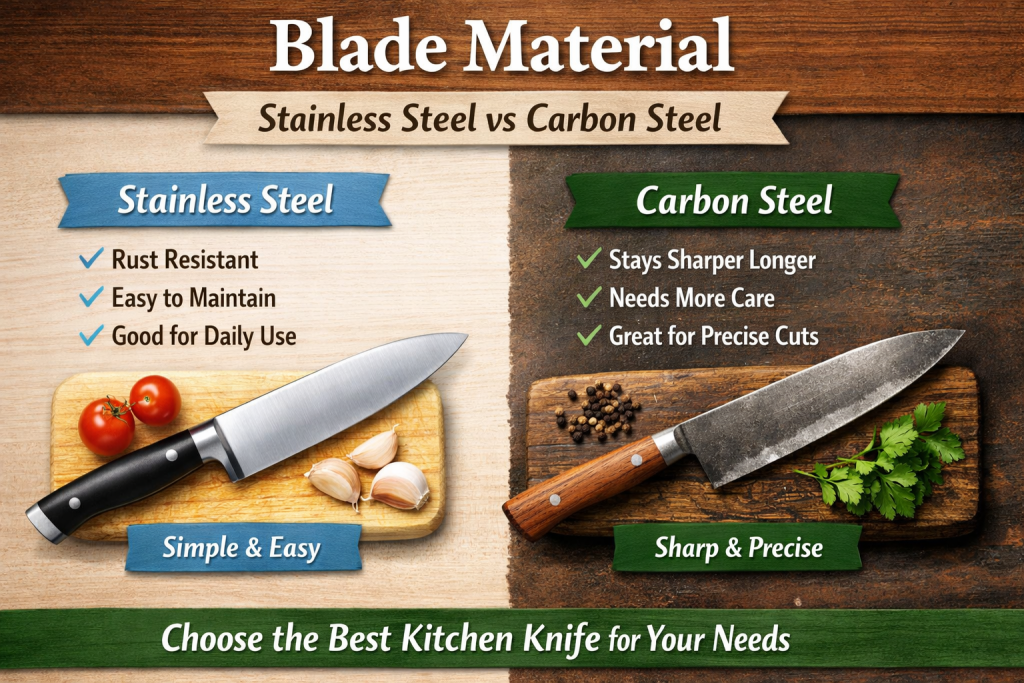
Stainless steel knives are very popular. They are easy to use and easy to maintain.
- They do not rust easily
- They are low maintenance
- Good for everyday use
But they may lose sharpness a bit faster than carbon steel.This is a good choice if you want something simple and easy.
Carbon Steel
Carbon steel knives are very sharp. Many experienced users like them.
- They stay sharp for a longer time
- They are easy to sharpen
- They give clean and precise cuts
But they need more care. They can rust if you do not clean and dry them properly.This is a good choice if you don’t mind extra care.
So, If you want something easy, go with stainless steel. If you want better sharpness and don’t mind maintenance, try carbon steel.
2. Knife Size
Knife size is very important when choosing a kitchen knife. The right size makes cutting easier and safer. It also helps you feel more comfortable while cooking.
Kitchen knives come in different sizes. But you don’t need to try them all. Just focus on what feels right for you.
Small Knives (6 inches or less)
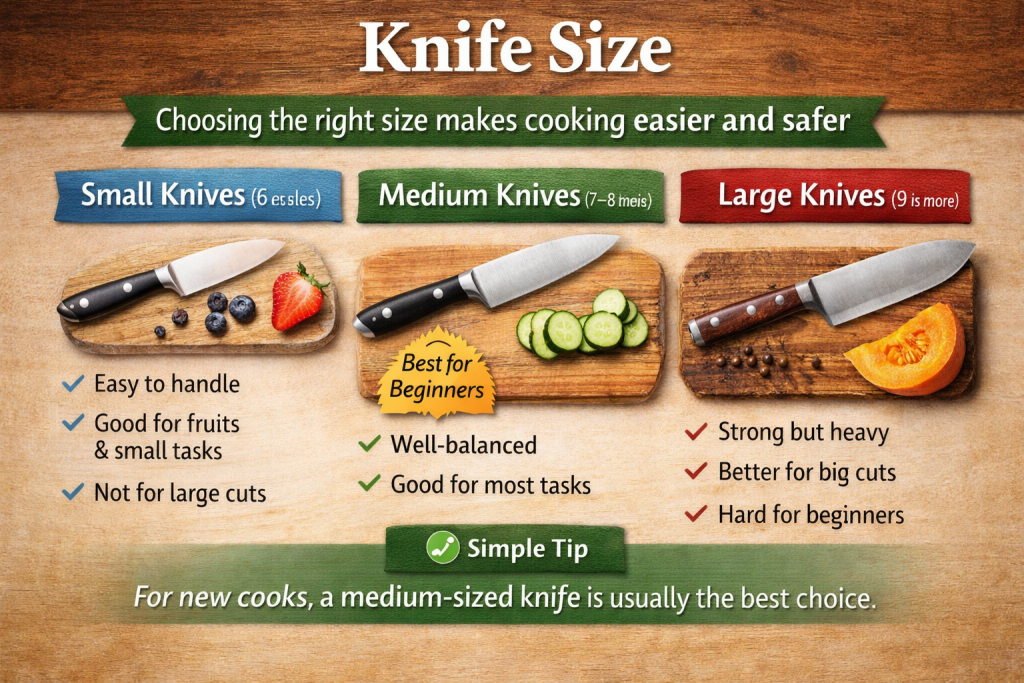
Small knives are easy to control. They are light and simple to use.
- Good for small tasks like peeling and cutting fruits
- Easy to handle for beginners
- Not suitable for large cutting tasks
Medium Knives (7–8 inches)
This is the most popular size. It is a great balance of control and power.
- Good for both small and large tasks
- Easy to use and very practical
- Best for Beginners
A medium-sized chef’s knife is often the perfect starting choice.
Large Knives (9 inches or more)
Large knives are strong and powerful. But they can feel heavy.
- Good for cutting large items
- Better for experienced users
- Can be hard to control for beginners
If you are just starting, choose a medium-sized knife. It is easy to use and works for most tasks.
When you pick the right size, cooking becomes smoother and more comfortable.
3. Handle Comfort & Grip
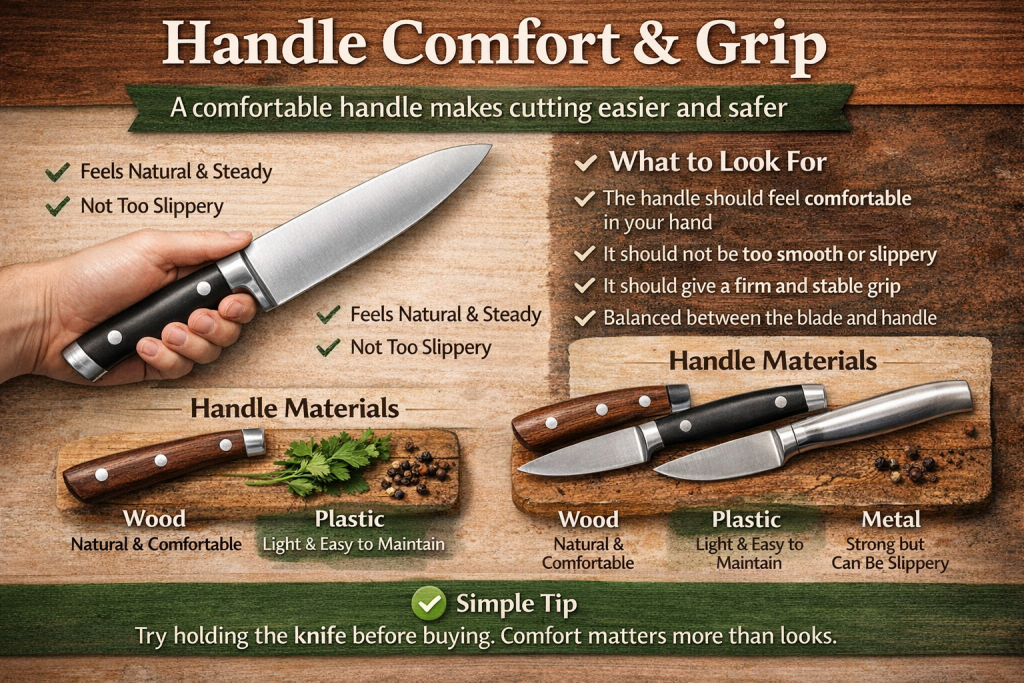
The handle of a knife is just as important as the blade. If the handle is not comfortable, the knife will be hard to use. It can also be unsafe.
When you hold a knife, it should feel natural in your hand. It should not slip. It should not feel too heavy or too light. A good grip gives you better control while cutting.
What to Look For
- The handle should feel comfortable in your hand
- It should not be too smooth or slippery
- It should give you a firm and stable grip
- The knife should feel balanced between the blade and handle
Handle Materials
Handles come in different materials like wood, plastic, or metal.
- Wood handles feel natural and comfortable
- Plastic handles are light and easy to maintain
- Metal handles are strong but can feel slippery
Choose what feels best for you. Comfort matters more than looks.Always hold the knife before buying, if possible. If it feels good in your hand, it is likely the right choice.
A comfortable handle makes cutting easier, safer, and more enjoyable.
4. Weight & Balance (Light vs Heavy)
Every knife feels different. Some are light, and some are heavy.
- Light knives are easier to move and control
- Heavy knives can cut with less effort but may feel tiring
Balance is also important. A good knife should not feel too heavy on one side. It should feel stable in your hand.
So, choose what feels comfortable for you.
5. Budget (What to Expect)
You don’t need to spend a lot of money. But very cheap knives are not a good idea.
- Low budget → basic quality, may not last long
- Mid-range → good balance of quality and price (best for most people)
- High-end → better materials and longer life
Start with a mid-range knife. It gives you good quality without spending too much.
It becomes much easier to Choose the Best Kitchen Knife,.when you understand these factors, Focus on comfort, quality, and your needs. Don’t rush. Take your time and pick the one that feels right for you.
Common Mistakes to Avoid
When you try to Choose the Best Kitchen Knife, it’s easy to make small mistakes. These mistakes can lead to a bad experience later. Let’s keep things simple and avoid them from the start.
Buying Too Cheap
A very cheap knife may save money at first. But it often becomes dull quickly. It may also break or feel unsafe.
It’s better to choose a good quality knife within your budget. Think of it as a long-term investment.
Ignoring Comfort
Comfort is very important. If the knife doesn’t feel good in your hand, it will be hard to use.
Always check the handle. Hold the knife if possible. It should feel natural and easy to control.
Choosing the Wrong Size
Size matters more than you think.
- A very big knife can feel heavy and hard to control
- A very small knife may not be useful for bigger tasks
For beginners, a medium-sized knife (around 8 inches) is usually the best choice.
Not Checking Quality
Many people forget to check the quality before buying.
Look at the blade and handle. A good knife should feel strong and balanced. It should not feel loose or weak.
Take your time before buying. Don’t rush. When you avoid these simple mistakes, it becomes much easier to Choose the Best Kitchen Knife that works well for you.
Final Notes
Choosing the right kitchen knife does not have to be hard. It may feel confusing at first. There are many options. But once you understand your needs, it becomes simple.
You do not need many knives to start. One good knife can do most of your daily work. Just focus on quality. Pick the right size. Make sure it feels comfortable in your hand.
Take your time and choose carefully. When you follow these simple steps, you can easily Choose the Best Kitchen Knife for your needs. A good knife will make your cooking safer, easier, and more enjoyable every day.